Why Seek Discomfort Needed This Kind Of Content
I’ve always liked the idea behind Seek Discomfort.
The philosophy is pretty simple: do things that make you uncomfortable. Talk to strangers. Go somewhere you’ve never been. Say yes when you normally would say no. Put yourself in situations where you don’t know what’s going to happen.
As someone whose entire life currently revolves around travelling to countries I’ve never been to, that philosophy felt like a pretty natural fit.
So when I started working with Seek Discomfort,
I didn’t want to make traditional sponsored content.
I wanted to make content that actually felt like Seek Discomfort.
The first project: “How many side quests can I do in Madagascar?”
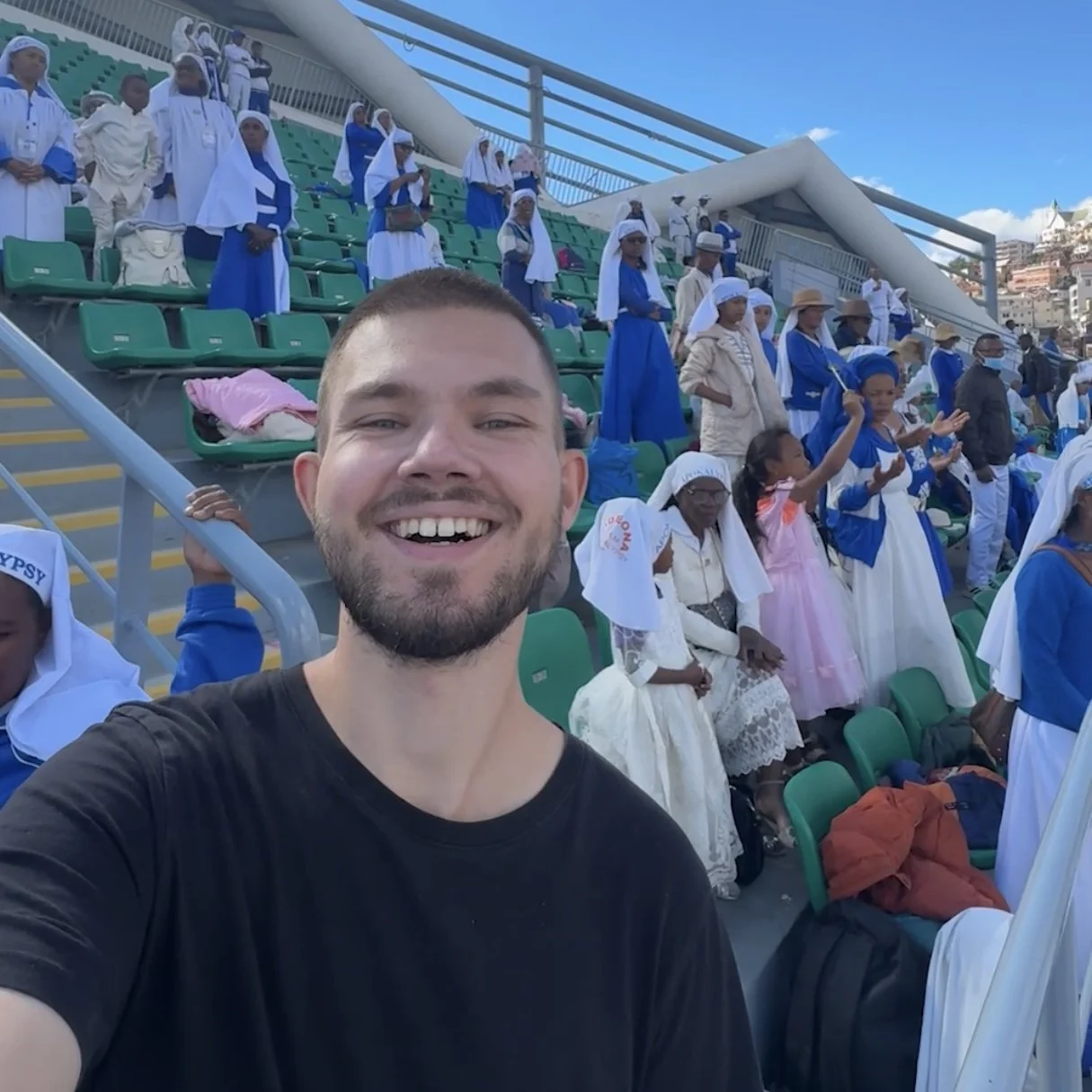
One of my first pieces of content for Seek Discomfort was created in Antananarivo, Madagascar, around the launch of their Open to Side Quests collection.
But what exactly is a “side quest”?
The term comes from video games. The main quest is the objective you're supposed to be following, while a side quest is an unexpected detour you take along the way. It might not have anything to do with your original goal, but it often ends up being more interesting than the main story.
And that's exactly what I wanted to explore in Madagascar.
The idea was simple: instead of following the main quest, how many unexpected side quests could I complete in a single day?
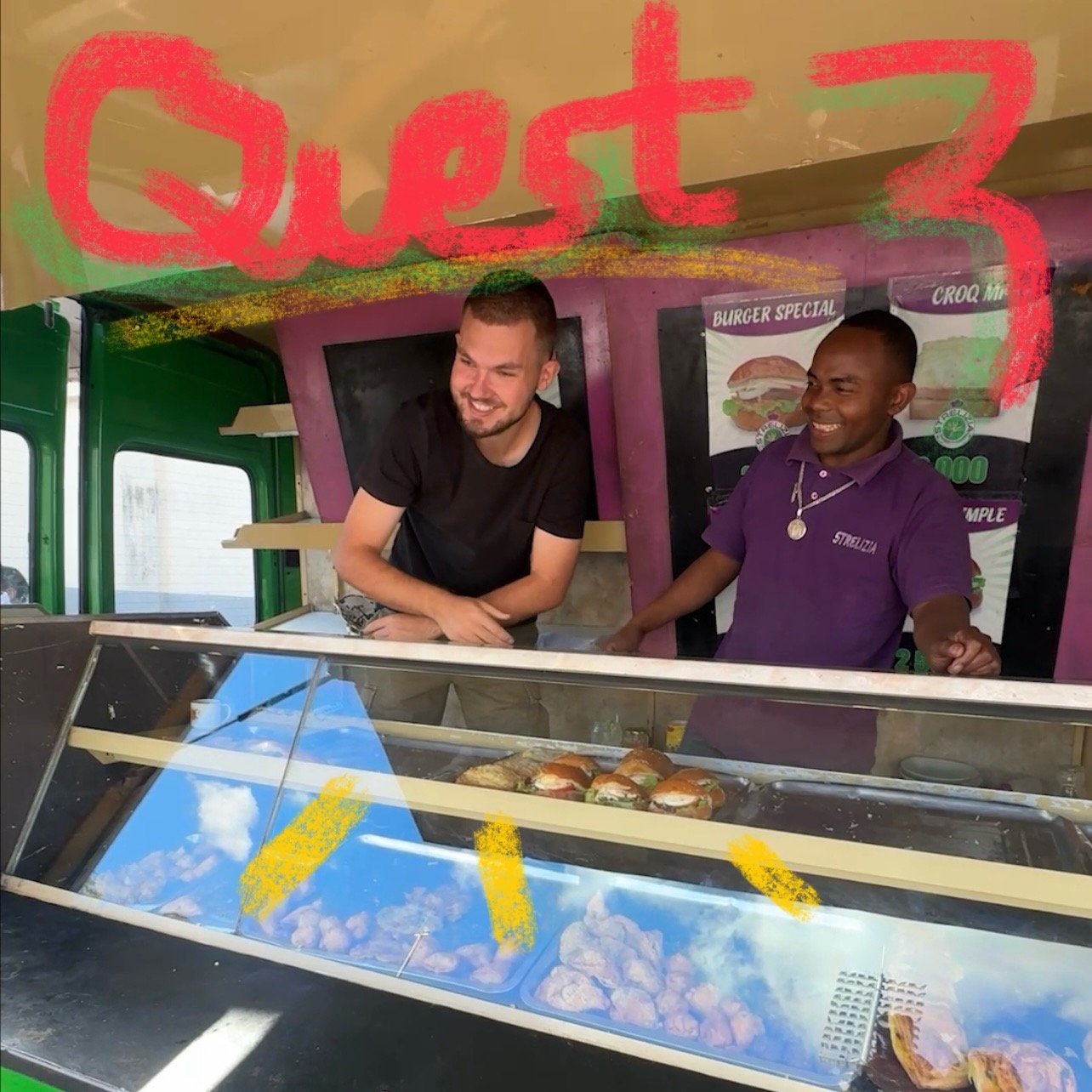
And very quickly, things started happening.
None of these moments were scripted.
That was the point.
The story was built around saying yes to whatever happened next.
The Results
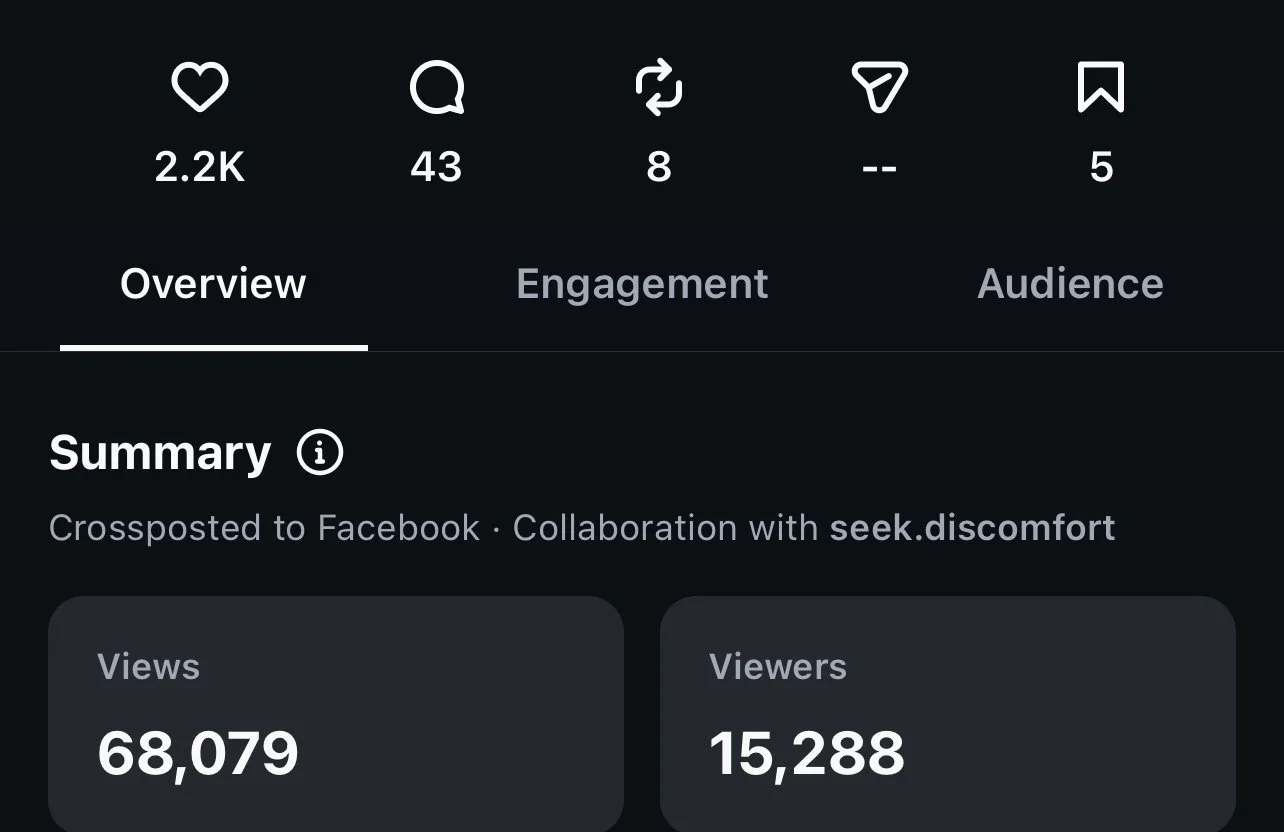
My role in the partnership was to translate Seek Discomfort's philosophy into content that felt natural within my travel storytelling. Rather than simply featuring the products in my videos, I looked for ways to build the brand's core ideas directly into the concepts themselves.
The product was present, but it wasn't the story.
The brand idea was the story.
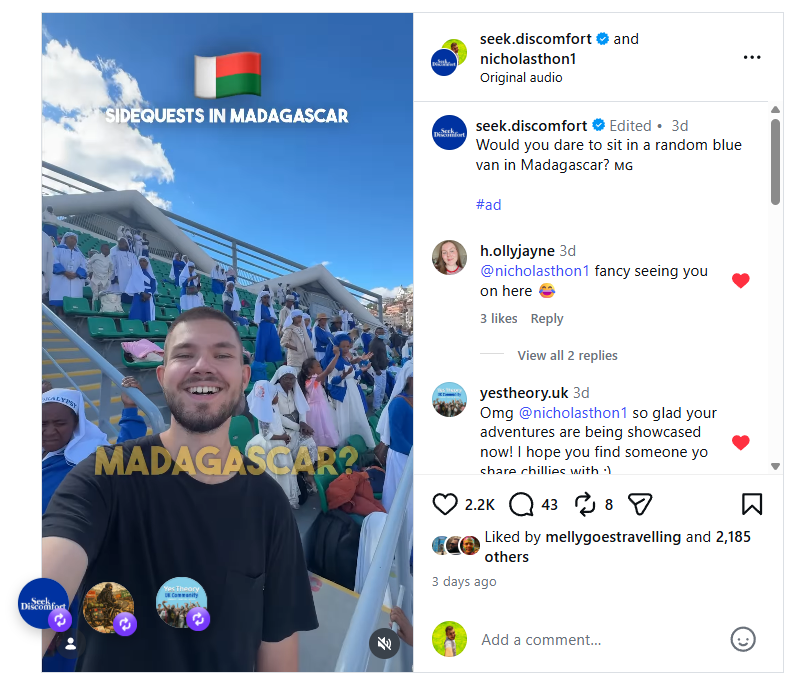
This approach helped the content feel native to my audience while still communicating what Seek Discomfort stands for. The video became one of the best-performing pieces of content Seek Discomfort published during my first month as an ambassador, and the feedback from the team was extremely positive. For me, that's the most valuable part of the partnership:
Finding the intersection between what a brand wants to communicate,
and what an audience actually wants to watch.
Impact on viewers
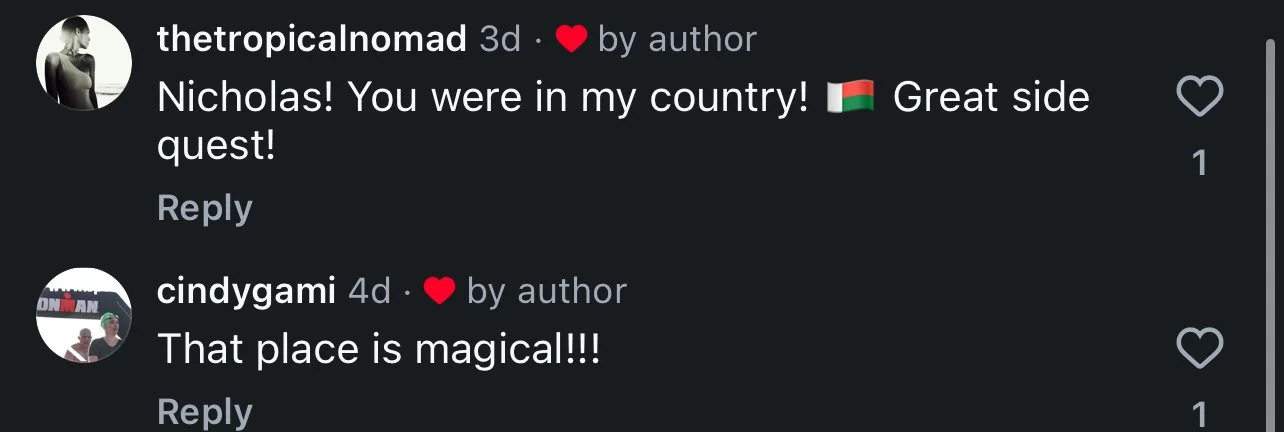
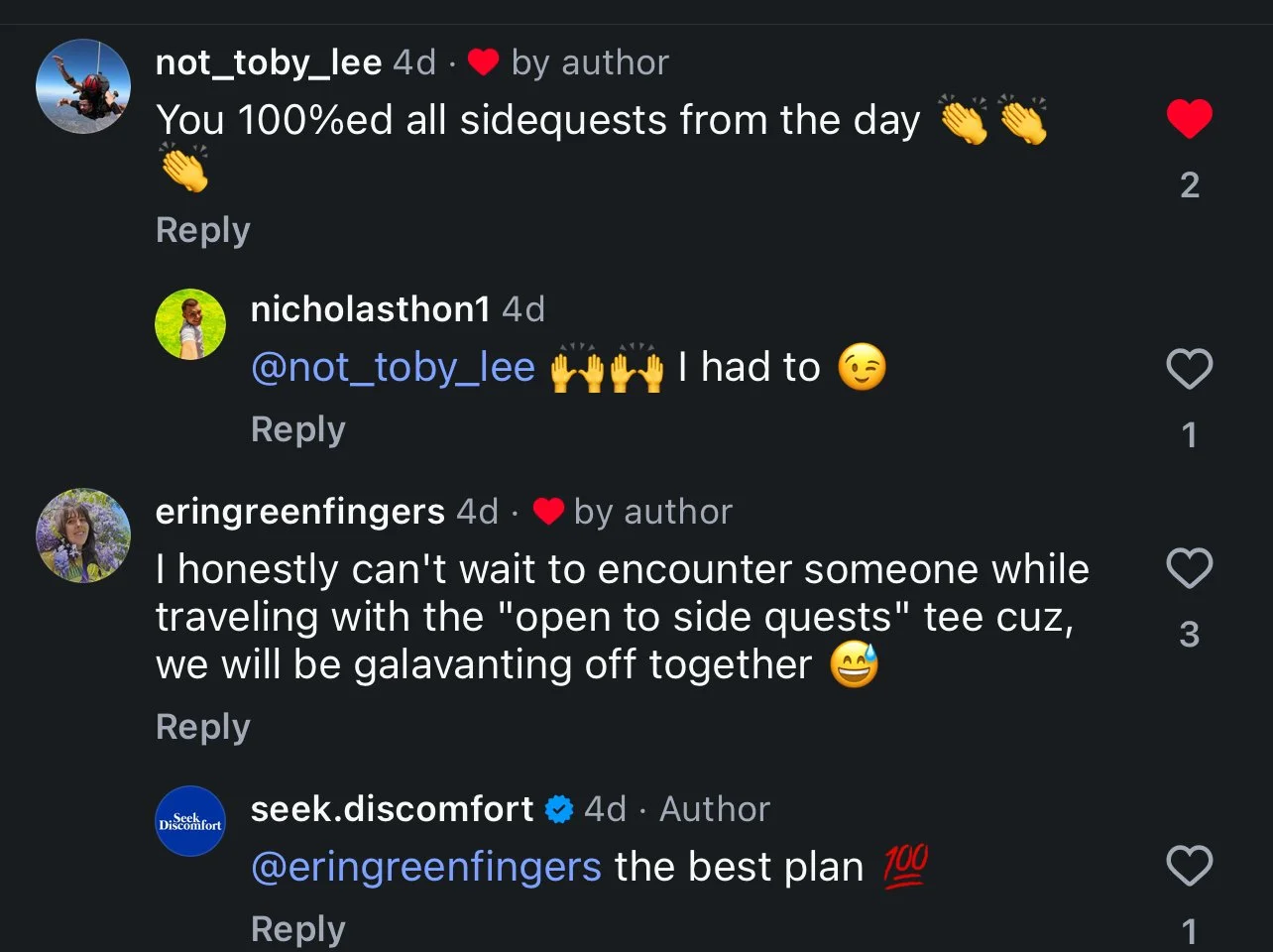
Beyond views and engagement, the video clearly resonated with people from the Eritrean diaspora in Sweden and abroad.
Many comments were from Eritreans thanking Jesper for showing their country positively and respectfully.
This kind of response shows that the visuals and storytelling did more than entertain; they helped people feel seen and proud of where they come from.
Why This Case Matters
For creators
Build the concept around the brand – start with the brand's idea and turn it into a content concept, rather than trying to force a product into an existing video.
Let real experiences drive the story – spontaneous moments can create stronger and more memorable content than heavily scripted scenarios.
Hook viewers with an open question – a simple premise like “How many side quests can I do in Madagascar?” gives the audience a reason to keep watching.
For sponsors
Get more than product placement – the brand becomes part of the narrative, allowing its message to be communicated without interrupting the content.
Reach an audience through authentic experiences – the partnership puts the brand inside real travel moments and stories that audiences are already interested in.
Work with a creator who understands the brand – the content isn't just an execution of a brief; it translates the brand's values into something people actually want to watch.